Asset List for Your Family: What Your Next of Kin Should Find
A good family asset list tells your next of kin what you own, where it is kept, where the proof is and who to call. Here is what to include and how to build it in an afternoon.
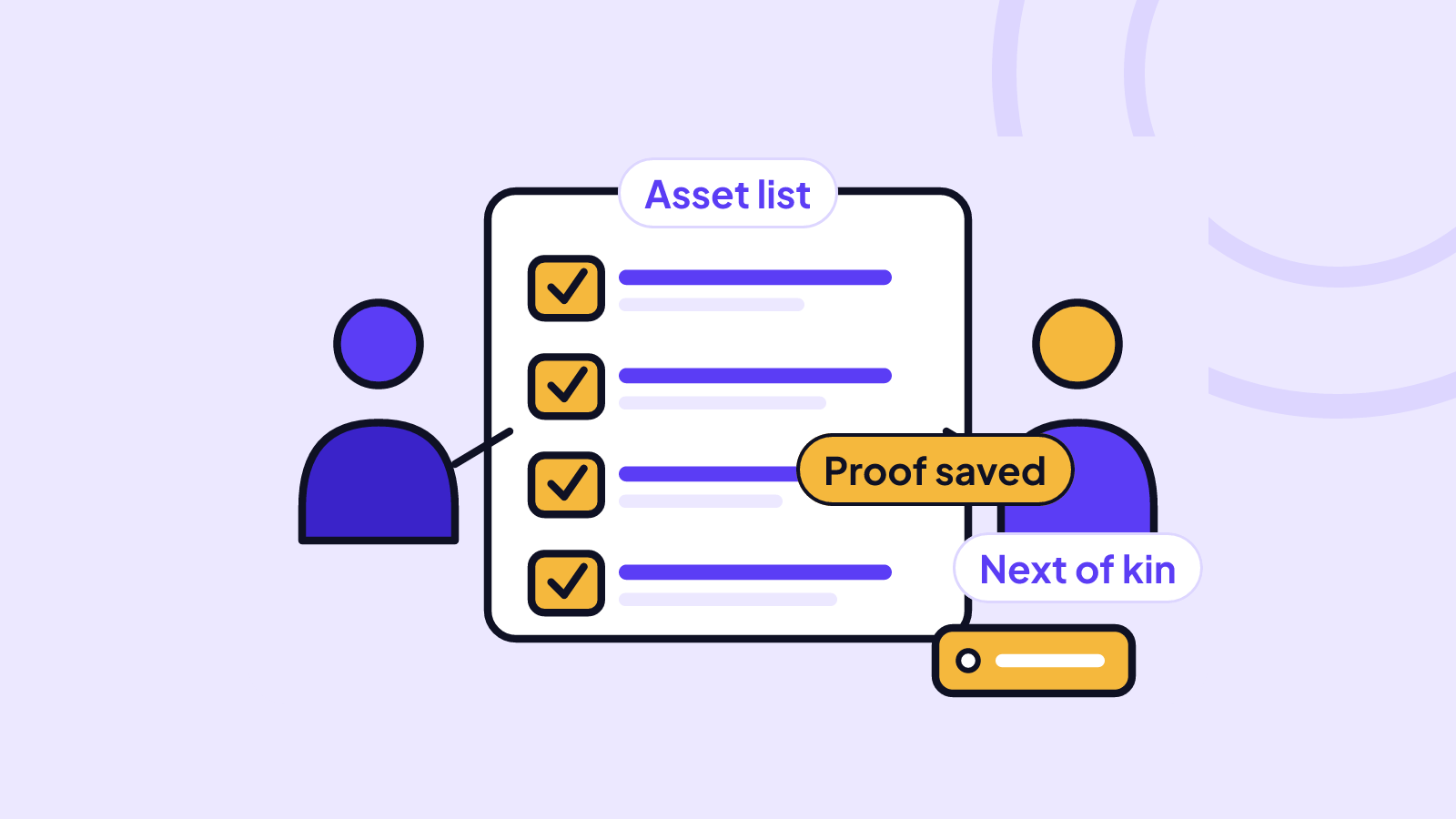
Your next of kin should be able to find a clear list of what you own, where each item is kept, where its proof sits and who to contact, without needing your phone password or your memory. Build it once, keep it current, and share it with one or two trusted people.
Key takeaways
- A family asset list answers four questions for every item: what is it, where is it, what proof exists and roughly what is it worth.
- Include things that are easy to forget: money in fintech apps, items stored at relatives, vehicle papers and land documents.
- Never write passwords or PINs into the list. Record where access instructions are kept instead.
- An afternoon is enough to build a useful first version. A quick review twice a year keeps it honest.
Why does your family need an asset list?
Most of us carry the full picture of what we own in our heads. That works until you are ill, abroad, out of reach or no longer around. Then a spouse, parent or sibling is left guessing which bank holds an account, who has the car papers, or whether the generator at the village house is yours or borrowed.
In Nigeria this is sharper than it looks. Wealth is often spread across several places: a bank account, a savings app, a phone full of mobile money, a plot of land in one town, a shop in another, and equipment lent to a cousin. Much of it lives on a phone that only you can unlock. A simple, shared list turns a stressful scramble into a calm afternoon of reading.
A list is not a will. It does not decide who gets what, and it does not replace advice from a lawyer on estate matters. It simply makes sure the people who need to act know what exists and where to look.
What should your next of kin be able to find?
Think in groups, so nothing is missed.
Money and accounts
- Banks, savings and investment platforms, and mobile wallets, with the institution name and branch or app, but not the login details.
- Money owed to you and money you owe, with who and roughly how much.
Property and land
- Where the title or allocation documents are kept, and who holds copies.
- Rent agreements, tenancy details and the landlord or tenant contact.
Vehicles
- Make, model, year, plate number, and where the registration papers, licence and spare keys are.
Valuables and household items
- Jewellery, gold, phones, laptops, TVs, appliances, generators, solar equipment, with a photo and a serial number where one exists.
Business items
- Equipment, stock and tools you use to earn a living, plus where the business records are kept.
Items not in your hands
- Anything lent out, stored with a relative, or left in a family house, with the name of the person who has it and the date it left.
For each entry, aim for the same four facts: a short description, the location, the proof (receipt, photo, serial number, document) and an approximate value in naira. If you want a ready-made walk through the rooms, the home inventory checklist covers the household side in detail.
How do you build it in an afternoon?
You do not need to be perfect. You need to be complete enough that nothing important is invisible.
- Start with a quick sweep (30 minutes). Walk through each room, and your car and workplace, and type or say aloud every item worth more than a month of small expenses. Do not stop to look up details yet.
- Add the money and papers (30 minutes). List accounts, wallets, loans, land and vehicle documents, and where the originals sit.
- Photograph as you go (45 minutes). Take one clear photo of each item, one of the serial number label, and one of the receipt if you still have it. Phone gallery photos are fine.
- Estimate values (30 minutes). Use what a similar item costs to buy today. With a weaker naira and rising prices, what you paid three years ago is often well below what it would cost now, so check current listings rather than trusting old receipts.
- Note who has what (15 minutes). Record items on loan or in someone else's home.
If you already have a spreadsheet, a notes file or a Word document, a Pro Vault in VaultCova lets you attach it in chat and Cova reads every item into your register, even from an untidy list. Otherwise, you can add items one by one in VaultLog, VaultCova's asset register. Logging is free, and the Free Vault holds up to 30 assets, which is plenty for a first pass. You can attach receipts and photos to each entry, so the proof sits next to the item. For a wider view of why this habit pays off, see what an asset register is and why it matters.
How do you share it safely?
A list nobody can reach is no use, and a list everyone can read is a risk. Aim for the middle.
- Choose one or two people you trust completely, such as a spouse and an adult child or sibling.
- Share a copy, not the keys. From VaultLog you can download a schedule-of-assets PDF, a branded register of everything you have logged, on any plan. Send that to your chosen people, or keep a printed copy in a safe place at home.
- Leave out secrets. Write "phone PIN and banking passwords: written in the sealed envelope kept with [name]" rather than the passwords themselves.
- Tell them it exists. Say where the file is and what it is for, so it is not discovered by accident years later.
If you have a lot of items spread over several homes, the grouped views in VaultLog (Individual plan and up) let you see everything by category or by location, which makes it easy to tell a relative what is in the family house and what is in your flat.
How do you keep it current?
An outdated list can mislead as badly as no list. Build three small habits:
- Add as you buy. When you get a new phone, appliance or vehicle, log it the same day while the receipt is still in your hand. Pro Vault users can scan a receipt and let Cova read the purchase.
- Remove as you sell, give away or lose. A line saying "sold to Tunde, March" is better than an item that quietly disappears.
- Review twice a year. Pick two dates you will remember, such as the start of the rainy season and the end of the year. Update values, check that papers are still where you said, and confirm anything on loan has come back. Value tracking in Pro Vault can show how an item's value changes over time, and our guide to setting up a fixed asset register is useful if part of your list is business equipment.
Frequently asked questions
Should I put passwords in my family asset list?
No. Write down where access details are kept, for example in a sealed envelope held by a trusted person, but never the passwords or PINs themselves. A list that leaks should not give anyone access to your money.
How detailed does the list need to be?
Enough that a stranger could identify each item and find its proof. A short description, location, photo, serial number if there is one, and an approximate naira value is usually plenty. You can add detail over time.
Does an asset list replace a will?
No. A list tells your family what exists and where to find it, while a will sets out who should receive what. A lawyer can advise you on the legal side, and your list makes their work and your family's job much easier.
What if I do not have receipts for older items?
A clear photo, the serial number and a note of roughly when and where you bought it still help a great deal. Going forward, keep receipts and photos with each entry as you add it.
Start your vault today and log your first few items in VaultLog; your family will thank you for the afternoon you spent.