Business Interruption Insurance in Nigeria: Cover and Indemnity Period
How business interruption insurance pays lost gross profit after a fire, how the indemnity period and sum insured work, and a worked naira claim example.
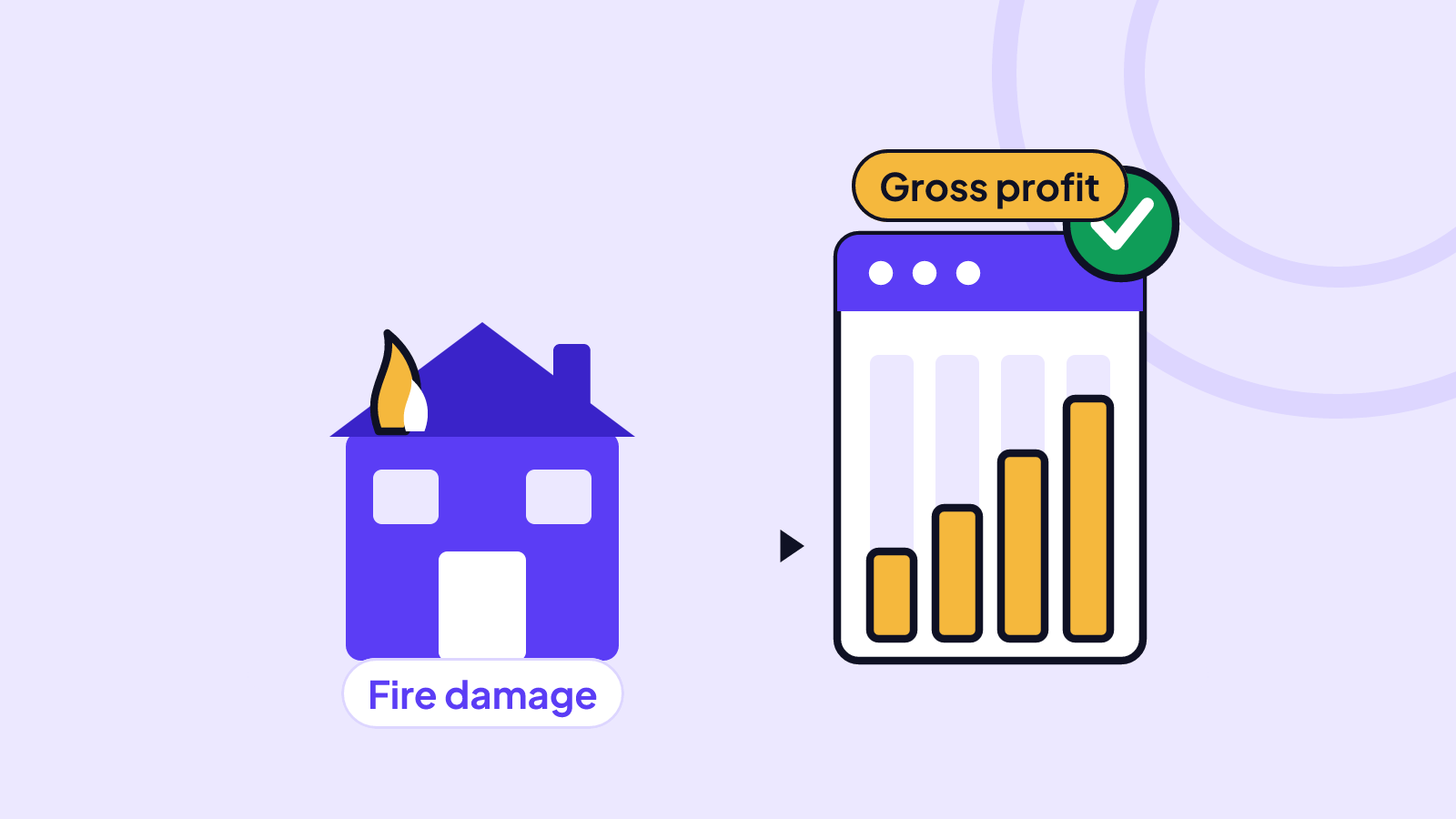
Business interruption insurance pays the profit a business loses, and the extra costs it carries, while it recovers from insured damage such as a fire. It is written alongside a property policy, it is sized on your gross profit rather than your turnover, and it only pays when the damage itself is covered.
Key takeaways
- Business interruption (BI) cover replaces lost gross profit and pays the extra cost of keeping trading after insured damage.
- It only responds when there is a valid claim under your property (material damage) policy, usually Fire and Special Perils.
- The indemnity period is the longest time after the damage that your results are covered, not a waiting period. Choose it from how long recovery really takes.
- The sum insured must match gross profit for the whole indemnity period, or the Average clause cuts the claim.
- Good monthly accounts are the evidence. Without them, a BI claim is hard to prove.
What does business interruption insurance cover?
A fire can be put out in an afternoon. The business it hits may take a year to trade normally again. Property insurance rebuilds the premises and replaces the machines and stock; it pays nothing for the sales lost while that happens. Business interruption insurance, sometimes called consequential loss insurance, fills that gap.
A typical BI policy pays two things:
- Loss of gross profit: the profit you would have earned on the turnover you lost because of the damage.
- Increased cost of working: reasonable extra spending that keeps turnover from falling further, such as renting a temporary warehouse, running overtime, outsourcing production or hiring a generator.
Gross profit here has a specific meaning. It is your turnover minus the costs that stop when sales stop, which policies call the uninsured or specified working expenses. Purchases of raw materials and stock are the usual examples. What is left covers the costs that carry on regardless, such as salaries, rent, loan repayments and insurance, plus your net profit. Those are exactly the costs that hurt when trading stops.
How does BI work with your property insurance?
BI is not sold on its own. Almost every BI policy carries a material damage proviso: the interruption must be caused by damage that is insured under a property policy, and that policy must pay (or would pay but for an excess). In practice this means BI follows your Fire and Special Perils cover. If a flood damages your factory and flood is excluded from your property cover, the BI claim fails too.
Two things follow:
- The perils on your property policy decide what your BI cover responds to. Check the property policy first.
- Underinsuring the building or machinery can hold up the rebuild, and a slower rebuild means a longer, larger BI loss. The two covers should be set together.
You can read more on the property side in our guide to fire insurance in Nigeria.
What is the indemnity period, and how long should yours be?
The indemnity period is the maximum time, starting from the date of the damage, during which the policy pays for the drop in your results. It is not a waiting time and it does not start when you reopen. Common choices are 12, 18 or 24 months.
Pick it from a realistic picture of recovery, not from habit:
- How long would it take to clear the site, get approvals and rebuild?
- How long are lead times on your key machines? Imported plant can take many months to arrive.
- How long would it take to win back customers who moved to a competitor while you were closed?
If rebuilding takes nine months and customers take another six to return, a 12-month indemnity period leaves the last three months of lost profit uninsured. A longer period costs more, but it is the most common gap in BI programmes.
How is a BI claim worked out? A worked example
Take a manufacturer in Ogun State with these annual figures:
- Turnover: ₦240,000,000
- Purchases of raw materials (uninsured working expenses): ₦132,000,000
- Gross profit: ₦240,000,000 minus ₦132,000,000 = ₦108,000,000
- Rate of gross profit: ₦108,000,000 divided by ₦240,000,000 = 45%
A fire damages the production floor. Over the 12-month indemnity period, turnover is ₦60,000,000 lower than it would otherwise have been.
- Loss of gross profit: 45% of ₦60,000,000 = ₦27,000,000.
- Increased cost of working: the firm rents temporary space and runs extra shifts at a cost of ₦4,000,000. This is usually payable as long as it is reasonable and does not exceed the gross profit it saves.
- Savings: some insured costs stop during the interruption, for example ₦1,000,000 of electricity on the damaged line. Savings are deducted.
Claim before Average: ₦27,000,000 + ₦4,000,000 minus ₦1,000,000 = ₦30,000,000.
Now suppose the gross profit sum insured was set at ₦81,000,000 when it should have been ₦108,000,000 for a 12-month indemnity period. The firm insured 75% of what it should have, so the Average clause pays 75% of the loss: ₦22,500,000, before any excess. The firm carries ₦7,500,000 itself. Our guide to the Average clause explains the principle in more detail.
How do you set the right sum insured?
The gross profit sum insured should cover the gross profit you expect to earn over the indemnity period, looking forward rather than back:
- Start from last year's audited gross profit.
- Adjust for expected growth and for inflation in your prices. With a weaker naira pushing prices up, last year's figure is often too low.
- Scale it to the indemnity period. For 24 months, insure roughly two years of gross profit.
- Review it every year before renewal, with your finance team, not only your broker or insurer.
Some underwriters offer a declaration basis, where you insure a provisional figure and declare the actual gross profit after the year ends, with a premium adjustment. Ask whether yours does.
What evidence will the underwriter ask for?
A BI claim is an accounting exercise. The loss adjuster compares what you earned during the interruption with what you would have earned, so expect to provide:
- Monthly management accounts for at least the last two years, to show the trend and any seasonality.
- Audited financial statements.
- Sales records, invoices and VAT returns.
- Records of every extra cost incurred to keep trading, with receipts.
- A clear timeline of the damage, the rebuild and the return to normal trading.
Businesses that keep orderly monthly figures settle BI claims faster and with fewer disputes. The same discipline helps with the property claim, where an up-to-date asset register proves what you owned and what it cost to replace. Insuring business stock covers the stock side of that record.
A checklist for your finance and operations team
- Confirm your property cover (Fire and Special Perils or similar) is in place and fully valued.
- Map how long a full recovery would take, including equipment lead times and customer return.
- Choose an indemnity period that covers that whole recovery.
- Calculate gross profit using the policy's definition, and project it forward.
- Keep monthly management accounts current and stored off site.
- Agree in advance who will document extra costs if a loss happens.
- Review the figures every year before renewal.
Can you get business interruption cover through VaultCova?
Not yet. Business interruption insurance is not yet available through VaultCova. What you can do today is put the foundation in place: log your buildings, machinery and stock in VaultLog with current replacement values and proof of ownership, and insure the physical assets through the property covers on our panel, including Fire and Special Perils. If you would like BI cover, tell Cova. Requests are recorded, so the team knows there is demand.
Frequently asked questions
Is business interruption insurance the same as consequential loss insurance?
Yes. Both names describe cover for the loss of gross profit and the increased cost of working that follow insured damage. Some policies in Nigeria still use the older term, consequential loss.
Can I buy business interruption cover without fire insurance?
Usually not. BI policies carry a material damage proviso, so the damage must be covered and paid under a property policy first. Without that property cover, there is normally no BI claim.
Does business interruption insurance cover a pandemic or a power outage?
Generally only if the policy specifically extends to it. Standard BI follows physical damage to your own property, so a shutdown with no damage, or a loss of public power supply, is typically excluded unless an extension says otherwise.
When does the indemnity period start?
It starts on the date of the damage, not on the date you reopen. It ends when your results are back to normal or when the chosen period runs out, whichever comes first.
Do I need an accountant to make a claim?
It helps a great deal. The claim is worked out from your accounts, and many policies include cover for accountants' fees in preparing it. Check whether yours does.
Start your vault and talk to Cova to get your assets, values and proof in one place before you need them.