Replacement value vs market value: what is the difference?
One is what it costs to buy a new one today; the other is what your used item would fetch. Insuring on the wrong one leaves you short.
When you insure something, the amount you insure it for, the sum insured, should reflect a specific idea of value. Getting this wrong is the most common way people end up underinsured.
The two values
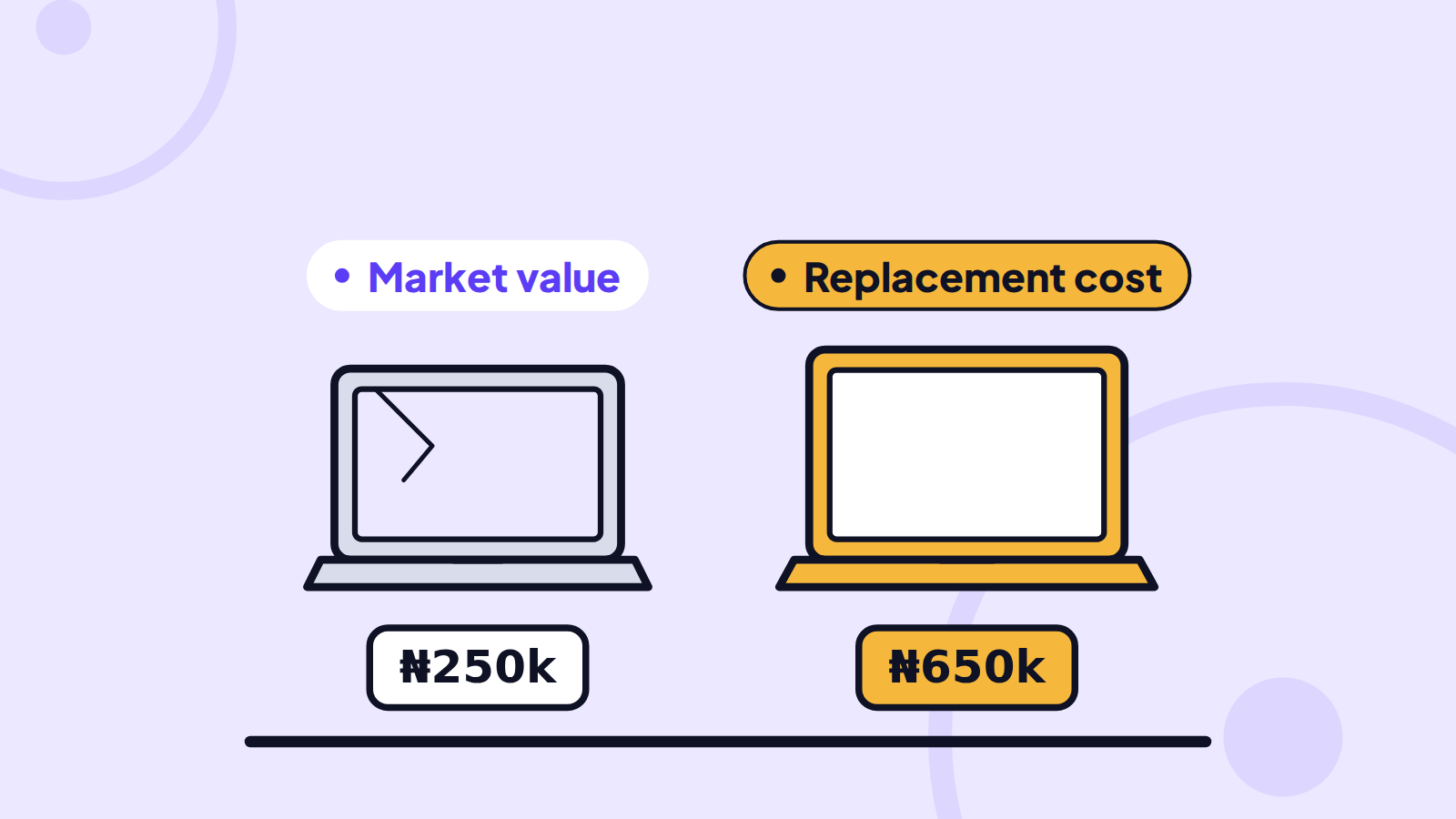
- Replacement value is what it costs to buy a new equivalent today. A three-year-old laptop that cost 500,000 might cost 650,000 to replace with today's model.
- Market value is what your used item would sell for now, after wear and depreciation. That same laptop might fetch 250,000.
Which one to insure on
Most people want to be put back in the position they were in before the loss, which means replacement value: enough to buy another one. Insuring on market value saves a little premium but leaves you unable to actually replace the item.
Why it matters at claim time
The sum insured you declare is what the "average" clause checks against. If you insure a 650,000 naira item for its 250,000 market value and it is destroyed, you are treated as underinsured and the payout is scaled down accordingly.
Keep values current
Prices move, especially with the naira. VaultCova tracks each asset's replacement cost over time, so your cover keeps pace instead of quietly falling behind.